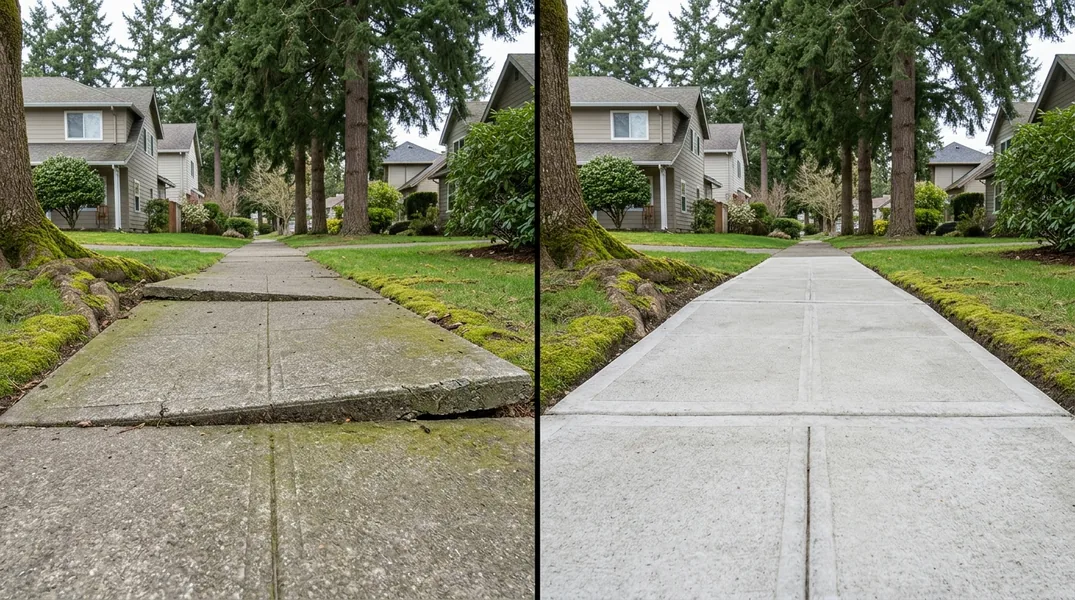
Understanding Glacial Till: Tacoma's Hidden Concrete Challenge
If you own a home in Tacoma, you're building on some of the Pacific Northwest's most complex soil. Glacial till, the remnant of ice age glaciers that retreated thousands of years ago, dominates the Puget Sound region's subsurface. This soil type is a dense mixture of clay, silt, sand, and gravel left behind by glacial activity, and it presents specific challenges for concrete construction that every homeowner should understand.
Glacial till in the Tacoma area is notoriously unpredictable. While it can be quite strong when properly compacted, it's also highly susceptible to moisture changes. When water saturates glacial till, it loses stability and can shift beneath your concrete slab. Conversely, during dry periods, the soil can shrink and create voids underneath your foundation. These cycles of expansion and contraction are a primary reason why many homeowners in our region experience concrete settling and cracking over time. Understanding this geological reality is the first step toward protecting your investment in Concrete Driveways and other concrete structures.
How Tacoma's Rainfall Amplifies Drainage Problems
Tacoma receives approximately 37 inches of rain annually, with the wettest months stretching from October through March. This consistent moisture is beautiful for the region's lush landscape, but it's a serious threat to concrete slabs that lack proper drainage infrastructure. When rain falls on or around your driveway, patio, or foundation, water that doesn't drain away quickly will seep into the soil beneath your concrete. In glacial till, this water infiltration causes the soil to become unstable, leading to shifting and settling.
Poor drainage slab cracking is one of the most common problems we see in residential concrete work throughout the region. Water pools around the edges of driveways and patios, gradually working its way under the slab. Over weeks and months, this moisture weakens the subgrade, creating soft spots. When a vehicle drives over these weak points, the concrete flexes and cracks. The problem compounds because cracks allow even more water to penetrate, accelerating the deterioration cycle. Homeowners often blame the concrete itself, but the real culprit is usually the soil and water management beneath the surface.
Concrete Settling in Tacoma, WA: Why Your Driveway Isn't Level Anymore
Concrete settling is perhaps the most visible consequence of glacial till and poor drainage in Tacoma. You might notice that your driveway has developed a noticeable slope where it once was level, or that one section has dropped several inches relative to another. This uneven settling creates trip hazards, makes it difficult to park vehicles, and can even cause water to pool in the low spots, perpetuating the drainage problem. In many cases, different sections of your concrete settle at different rates because the glacial till beneath them responds differently to moisture and load.
The mechanics of settling are straightforward: water infiltrates the soil, the soil loses bearing capacity, and the weight of the concrete causes it to sink into the softened earth. This process can happen gradually over years or accelerate dramatically after a particularly wet season. Homeowners in Lakewood and surrounding areas often call us after their driveways have settled, hoping for a quick fix. While Concrete Repair & Resurfacing can address surface-level damage, preventing settling in the first place requires attention to the subgrade and drainage during the original installation.
Building on Puget Sound Soil: Best Practices for Lasting Concrete
Tacoma Concrete understands that Puget Sound soil demands a different approach to concrete construction than you might find in drier regions. Proper site preparation is absolutely critical. This begins with comprehensive grading to ensure water runs away from your concrete slab, not toward it. A professional concrete contractor will evaluate the natural slope of your lot and design drainage that moves water to appropriate discharge areas. In many cases, this means installing a perimeter drain system or French drain to intercept groundwater before it reaches your concrete.
The subgrade preparation is equally important. Rather than pouring concrete directly on native glacial till, best practice calls for a properly compacted base layer of crushed rock or gravel. This base layer provides better drainage and a more stable foundation for the concrete slab. The thickness and composition of this base layer should be determined by a professional assessment of your site's soil conditions and expected load. When we install Concrete Driveways in University Place and throughout the region, we always prioritize these foundational elements because they directly determine how long your concrete will last.
Air entrainment in the concrete mix itself is another critical consideration for Puget Sound properties. Concrete with air-entrained agents contains tiny air bubbles that allow the material to expand and contract with freeze-thaw cycles without cracking. Our region's cold, wet winters make this feature essential for concrete longevity.
Recognizing Early Warning Signs of Drainage and Settlement Issues
Early detection can save you thousands of dollars in repairs. Watch for these warning signs on your concrete: hairline cracks that seem to follow a pattern, a gradual change in slope or levelness, or water pooling in certain areas after rain. If you notice that your driveway is higher or lower at one end than the other, settlement is already occurring. Similarly, if water consistently pools around your Concrete Patios or along your driveway edges, drainage is inadequate.
Another sign is efflorescence, a white, chalky substance that appears on the concrete surface. This occurs when water carries salts from the soil through the concrete and deposits them on top as the water evaporates. While efflorescence itself isn't dangerous, it indicates that water is moving through your concrete, which means moisture is reaching the subgrade beneath. If you spot any of these issues, contact Tacoma Concrete for a professional evaluation. Early intervention, such as improving surface drainage or addressing settling with Concrete Repair & Resurfacing, can prevent more costly damage down the road.
Protecting Your Concrete Investment in Tacoma
The best defense against glacial till and drainage problems is working with a concrete contractor who understands Puget Sound soil conditions. When you're planning a new driveway, patio, or any concrete project, invest time in proper site assessment and drainage design. This upfront planning prevents the settling and cracking that plague poorly constructed concrete throughout the region. Whether you're considering Stamped & Decorative Concrete for aesthetic appeal or a straightforward functional driveway, the foundation must be engineered correctly.
Regular maintenance also extends the life of your concrete. Keep gutters and downspouts clear so water drains away from your foundation and concrete slabs. Fill small cracks promptly before they grow and allow water infiltration. Ensure that landscaping and grading direct water away from your concrete, not toward it. These simple steps, combined with professional installation that accounts for glacial till and Puget Sound soil conditions, will keep your concrete sound for decades.
If you're concerned about your existing concrete or planning a new project, Tacoma Concrete is here to help. We've worked with countless homeowners throughout the region to solve settling, cracking, and drainage issues. Call us at (253) 498-9182 or visit our website to request a free estimate. We'll assess your specific site conditions and recommend solutions tailored to Tacoma's unique soil and climate challenges.
Looking for a professional concrete contractor in Tacoma? Tacoma Concrete responds fast for all your concrete needs.
Get a Free QuoteOur services: Concrete Driveways · Concrete Patios · Stamped & Decorative Concrete