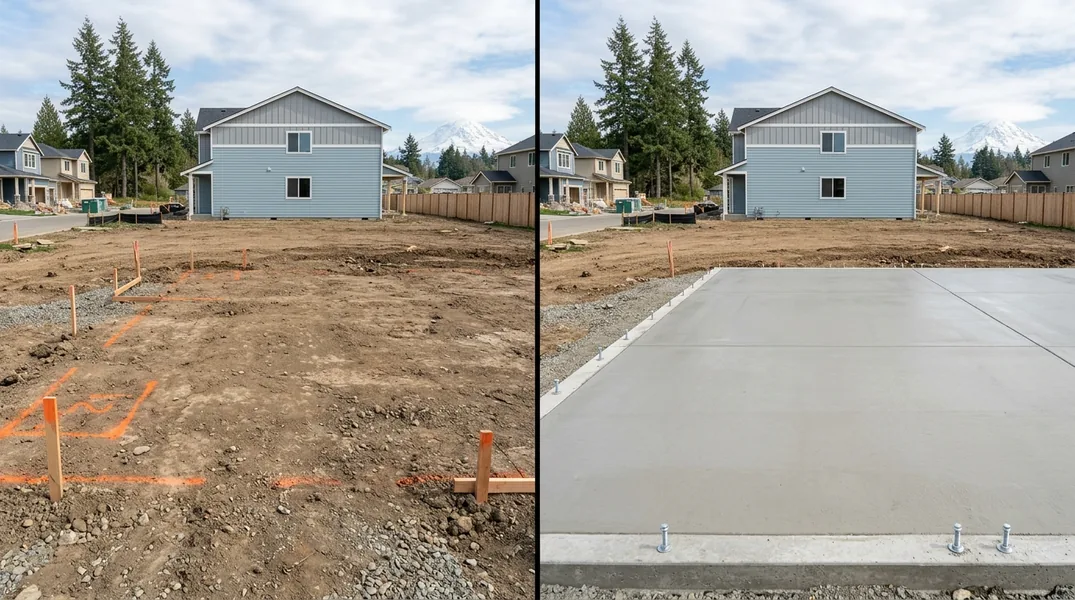
Understanding New Construction Concrete Slabs in Tacoma, Washington
Buying a new home in Tacoma is exciting, but the foundation quite literally supports your investment. A new construction concrete slab is typically the first major structural element installed, and it's critical to understand what you're getting before you sign closing papers. Unlike older homes where the foundation has proven itself over decades, new construction slabs are only as good as the design, materials, and installation practices used to create them.
Many homebuyers focus on cosmetic features like kitchen finishes and paint colors, but the foundation deserves equal attention. A properly installed concrete slab in Pierce County should last 30 to 40 years or more with minimal issues. However, poor soil preparation, inadequate reinforcement, improper drainage, or substandard concrete mix can lead to costly problems like cracking, settling, or moisture intrusion within just a few years. Understanding what builders should be doing and what you should be inspecting gives you leverage during the final walkthrough and protects your long-term investment.
What a Builder Foundation Inspection Should Include
Before closing on your new home, you have the right to conduct a thorough builder foundation inspection. This inspection should go beyond a visual once-over and should examine the concrete slab's structural integrity, drainage design, and compliance with local building codes. Start by walking the entire perimeter and interior of the basement or crawl space with a flashlight and a level. Look for visible cracks, especially those wider than 1/8 inch or any that show signs of movement. Small hairline cracks are common in new concrete as it cures, but larger or diagonal cracks warrant professional evaluation.
A qualified inspector should verify that the concrete slab meets the specifications outlined in the builder's plans and that it complies with Washington State building codes. They should check that the soil beneath the slab was properly compacted, that a vapor barrier was installed to prevent moisture from wicking up from the ground, and that the concrete itself meets the specified strength rating (typically 3,000 to 4,000 PSI for residential slabs). Inspect the perimeter for proper grading and drainage. Water should slope away from the foundation, not toward it. If you notice pooling water, inadequate gutters, or poor drainage design, these issues should be documented and corrected before you close.
New Home Foundation Warranty: What's Covered and What Isn't
Every new home builder in Washington is required to provide a structural warranty, but the specifics vary widely. A new home foundation warranty typically covers major structural defects for a set period, usually one year from closing for workmanship issues and up to ten years for structural problems. However, most warranties explicitly exclude cosmetic cracks, minor settling, and damage caused by poor maintenance or site conditions. Understanding what your builder's warranty actually covers before you close is essential, because once you own the home, you're responsible for maintenance and most repairs.
Read your warranty document carefully and ask your builder's representative to walk you through the coverage details. Does it cover concrete cracking caused by shrinkage? What about cracks that appear after the first winter freeze-thaw cycle? Does the warranty cover water intrusion if the slab develops cracks? Many builders limit coverage to structural failure that affects the safety or livability of the home, not cosmetic issues. Get everything in writing. If you notice any concerns during your final walkthrough, document them with photos and written notes, and request that the builder address them before closing or provide a credit toward repairs. This creates a paper trail and protects your warranty claim if issues develop later.
Common Foundation Issues in Pierce County New Construction
The Pacific Northwest climate, including the Tacoma area, presents unique challenges for concrete foundations. Our region experiences significant rainfall and seasonal freeze-thaw cycles that can stress concrete slabs. One of the most common issues is inadequate drainage or grading that allows water to accumulate against the foundation. Over time, this moisture can lead to cracking, efflorescence (white mineral deposits), and even structural damage. Builders who cut corners on drainage or grading may save money upfront, but homeowners pay the price in repairs.
Another frequent problem is insufficient or improperly placed rebar or wire mesh reinforcement. Concrete naturally shrinks as it cures, and without proper reinforcement, this shrinkage can cause cracking. Additionally, the Pacific Northwest's wet climate means vapor barriers are absolutely critical. If a builder skips this step or installs it incorrectly, moisture will migrate through the slab into the home, potentially causing mold, odors, and damage to flooring materials. Freeze-thaw damage is also a concern in our region. When water penetrates concrete and then freezes, it expands, creating additional stress on the slab. Builders who use low-quality concrete or insufficient air entrainment (tiny air pockets that allow concrete to expand safely during freezing) may see scaling, spalling, or surface deterioration within the first few winters.
Your Pre-Closing Walkthrough: A Foundation Checklist
Schedule your pre-closing walkthrough at least one week before your closing date so you have time to address any issues. Bring a camera, a level, a straightedge, and a moisture meter if possible. Walk every room and the basement or crawl space. Look for visible cracks in the concrete, paying attention to their location, width, and direction. Cracks that run diagonally or in a stair-step pattern are more concerning than those that run straight. Check the perimeter for water stains, efflorescence, or signs of moisture. Shine a light into corners and along the foundation line. If you see evidence of water intrusion, mold, or efflorescence, this is a red flag that should be addressed before closing.
Test the grading by pouring water near the foundation perimeter. It should flow away from the house, not toward it. Check that gutters and downspouts are installed and direct water at least 4 to 6 feet away from the foundation. Look for proper ventilation in crawl spaces and ensure that any sump pump, if installed, is functional. If your new home includes a basement or any finished space below grade, verify that the concrete slab is dry and that there's no musty odor. Document everything with photos and notes. If you find issues, provide this documentation to your builder in writing and request that they be corrected before closing or that you receive a credit for repairs. If the builder refuses to address significant structural concerns, consult with a structural engineer or attorney before closing.
When to Call a Professional: Foundation Concerns After Closing
After you close on your new home, you own the foundation and any issues that develop. If you notice significant cracking, water intrusion, or uneven settling within the first year, contact your builder immediately and file a warranty claim. Most builders have a 30-day or 60-day period after closing when they'll address issues without question. Beyond that, you'll need to prove that the problem existed at the time of closing, which is why your pre-closing inspection and documentation are so important.
If you're concerned about foundation issues in your new Tacoma home or nearby areas like Lakewood or Puyallup, consider having a structural engineer evaluate the slab. They can identify problems that aren't immediately visible and provide documentation that strengthens your warranty claim. For minor cosmetic cracks or surface issues that develop later, Concrete Repair & Resurfacing solutions can extend the life of your slab and prevent water intrusion. If you have questions about your foundation or need professional guidance, Tacoma Concrete is here to help. Call us at (253) 498-9182 or visit our website to get a free estimate and discuss your specific concerns with our team.
Looking for a professional concrete contractor in Tacoma? Tacoma Concrete responds fast for all your concrete needs.
Get a Free QuoteOur services: Concrete Driveways · Concrete Patios · Stamped & Decorative Concrete